Symptoms and Diagnosis of Congenital Heart Disease
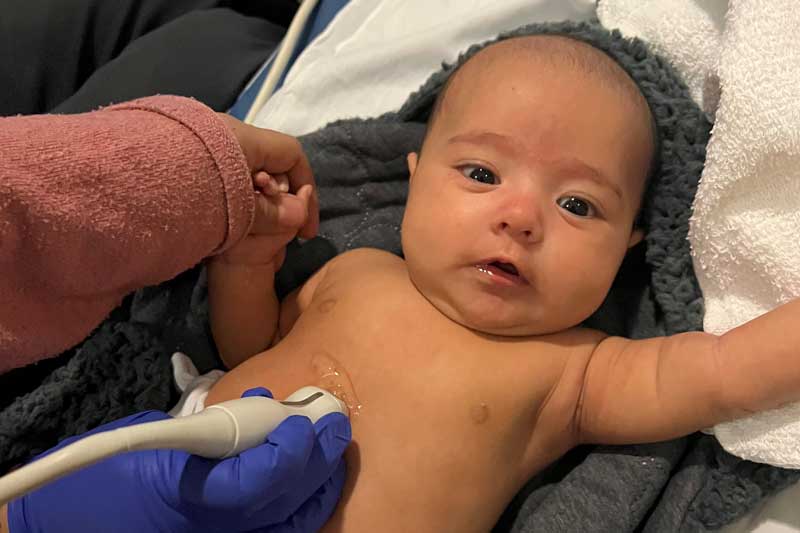
Scarlett was born with an atrial septal defect.
Congenital heart disease (CHD), also called congenital heart defects, is often diagnosed in babies or before birth. Some CHD is harder to detect than others and may not be diagnosed until later in childhood or adulthood.
What are symptoms of CHD in children?
Severe heart problems are often noticed in the first few months after birth. Some babies may look blue or appear very ill soon after they are born. Other heart defects can cause:
- Trouble breathing
- Problems with feeding
- Trouble gaining weight
Less severe heart defects are often found during a regular checkup. These problems usually do not cause symptoms. Most heart murmurs in children are harmless, but some can be a sign of an underlying heart defect.
If a heart problem is suspected based on symptoms or a heart murmur, your child’s healthcare professional will likely refer your child to a pediatric cardiologist. This is a heart doctor with special training in caring for babies, children and young adults, including congenital heart defects and heart rhythm problems. They can decide which tests and treatments are needed and how often your child will need heart checkups.
How is CHD diagnosed and monitored?
If you or your child has congenital heart disease, regular follow-up with a cardiologist is often important. Your cardiologist can perform tests to see how your heart is working.
At your visit, the cardiologist will ask about your medical history and do a physical exam. They may order tests such as:
Blood tests may also be needed, especially for people with cyanosis or single-ventricle hearts treated with a Fontan procedure, or to monitor overall health and organ function.
The healthcare team will explain each test. Feel free to ask questions at any time. After your tests are done, the cardiologist will go over the results and possible next steps.
Sometimes the first tests don’t give enough information to fully understand the heart condition. When that happens, more tests may be needed. These can include:
- Catheterization and angiography
- Magnetic resonance imaging (MRI)
- CT scan
- Holter monitor
- Exercise stress testing
Learn the common tests associated with congenital heart disease.


