Heart Valves and Circulation
Quick Facts
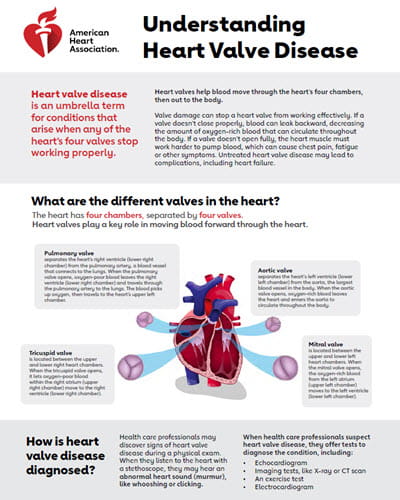
- Heart valves help control blood flow through the heart.
- If there are problems with a heart valve, treatment may be needed.
Heart chambers and valves
The heart’s job is to pump blood throughout the entire body so every cell can thrive.
Blood flows through the system in the same pattern:
- Blood comes into the heart from the body, passing through the chambers on the right side of the heart.
- It then goes out to the lungs to receive oxygen.
- Then the blood goes back to the heart, passing through the chambers on the left side and out to the body.
What is the purpose of the heart chambers?
A normal heart has two distinct sides and four chambers for circulating blood.
- The upper chambers, or atria, collect blood coming into the heart.
- The right atrium collects oxygen-poor blood flowing in from the body.
- The left atrium collects oxygen-rich blood flowing in from the lungs.
- The lower chambers, or ventricles, collect blood from the atrium above them.
- The right ventricle pumps blood to the lungs.
- The left ventricle pumps blood through the aorta and out to the entire body.
Why are valves important for circulation and health?
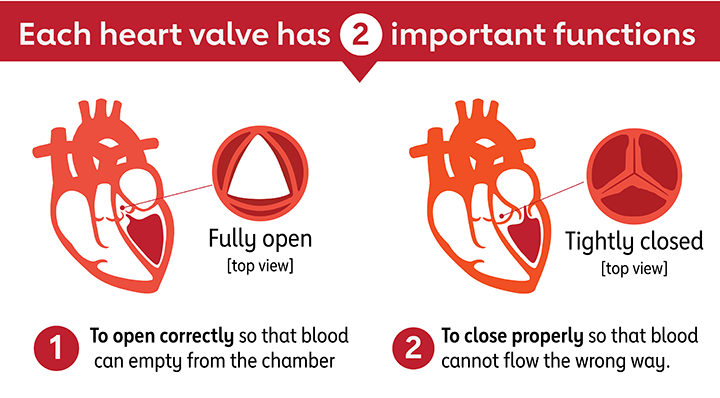
Heart valves are structures with flexible flaps called leaflets or cusps. Heart valves control blood flow between the heart’s chambers and between the heart and an artery.
Each heart valve has two functions:
- To open correctly so blood can enter into or empty from a chamber
- To close properly so blood doesn’t flow back into the area it came from
When the valves and chambers fail to move blood properly, symptoms may develop over time and require critical treatment.
What role does each heart valve play in healthy circulation?
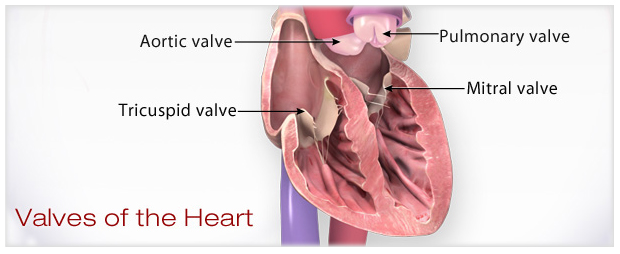
The four valves in order of circulation are:
- Tricuspid Valve
- Has three leaflets
- Separates the top right chamber (right atrium) from the bottom right chamber (right ventricle)
- Opens to allow blood to flow from the right atrium to the right ventricle
- Prevents the backflow of blood from the right ventricle to the right atrium
- Pulmonary Valve (or Pulmonic Valve)
- Has three leaflets
- Separates the right ventricle from the pulmonary artery
- Opens to allow blood to be pumped from the right ventricle to the lungs (through the pulmonary artery) where it will receive oxygen
- Prevents the backflow of blood from the pulmonary artery to the right ventricle
- Mitral Valve
- Has two leaflets
- Separates the top left chamber (left atrium) from the bottom left chamber (left ventricle)
- Opens to allow blood to flow from the left atrium to the left ventricle
- Prevents the backflow of blood from the left ventricle to the left atrium
- Aortic Valve
- Has three leaflets, unless it's abnormal from birth, such as a bicuspid aortic valve
- Separates the left ventricle from the aorta
- Opens to allow blood to leave the heart from the left ventricle through the aorta, then out to the body
- Prevents the backflow of blood from the aorta to the left ventricle
Essentials for properly working valves
- The valve is properly formed and flexible.
- The valve should open all the way so the blood can pass through.
- The valve should close tightly so no blood leaks backward into the chamber it came from.