Post Surgery Milestones: Managing Your Mood, Expectations and Goals
Quick Facts
- Feeling depressed after heart surgery is common.
- Learn the signs of depression and watch for changes in your mood.
- A simple routine can help support your emotional health.
You may feel anxious or stressed after surgery
Getting ready for major surgery can feel overwhelming. You may be thinking, “Who will handle my work responsibilities? Who can check on post-surgery prescriptions? How will the house chores get done?”
Many people focus on these details but don’t think as much about how they will feel emotionally during recovery.
It’s normal for your emotions to change after surgery. Some people feel hopeful when things go as planned. Others may feel down. Feeling depressed after heart surgery is common.
Ask your healthcare team about symptoms to watch for
Learn about signs of depression before you go home. Share this information with people who live with you so they can help watch for changes.
Talk with your healthcare professional if you notice:
- Feeling sad or empty most of the time
- Losing interest in hobbies and activities you usually enjoy
- Feeling hopeless or like things won’t get better
Up to half of people may feel depressed after heart surgery. Your healthcare team can help you find the right support. This may include treatment, including medication, or other ways to help you feel better.
There are also simple steps you can take to support your emotional health during recovery. A positive outlook during recovery can also improve your physical healing process.
What can I do to feel my best during recovery?
The good news is you can help yourself by:
- Practicing habits for emotional health
- Setting positive goals
- Maintaining realistic expectations
- Noticing and celebrating progress
Healthy habits: Build a simple routine
Getting up and moving can help support your mood. Start when your healthcare professional says it’s OK. Even small steps, like walking in the hallway, can make a difference.
Take it slow and don’t push yourself too hard. A steady pace will help you recover safely.
Having a daily routine can also help you feel more like yourself again. This might include simple things that lift your mood, as long as your healthcare team says they’re safe for you.
Liz Tatham, a heart valve replacement patient, says: “One thing I made myself do each day after my first week home was to get up each day and change out of my pajamas into actual clothing. Even if I wasn't going anywhere, it helped me develop a daytime routine and a nighttime routine. It also made me feel that I was emotionally going somewhere because I was dressed to take on the day.”

By week three, she started making time for social opportunities.
"I had a friend pick me up and take me to lunch outside of the house every Wednesday until I was cleared to drive myself.”
She also advises: “Patients should definitely ask how much and how often they should get up to walk and how much they should increase their walking each week. Before I began cardiac rehab, I had a chart that told me how much I needed to walk and how many times a day. At week two, I started with 5-10 minutes three to five times a day. I would check it off the chart, even though I just walked laps within my home. The dog thought it was strange at first, but then he started walking laps with me. I know recovery is different for everyone, but again, if I had not been given such specific instructions, I would not have known how much I could walk or the importance of moving to lower my risk of stroke. I was moving much more than I thought I would be.”
Manage expectations and celebrate small milestones
Learn what to expect before your procedure when you can. This can help you feel more prepared.
During recovery, focus on small wins each day. Noticing your progress can help you feel more positive over time.
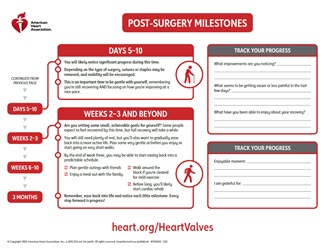
Print our Recovery Milestones checklist (PDF) and chart your progress toward wellness. This checklist is also available in Spanish (PDF).
It’s OK to need help
Some people need extra support to feel better during recovery. That’s not a failure.
Getting help is part of taking care of yourself and moving forward.
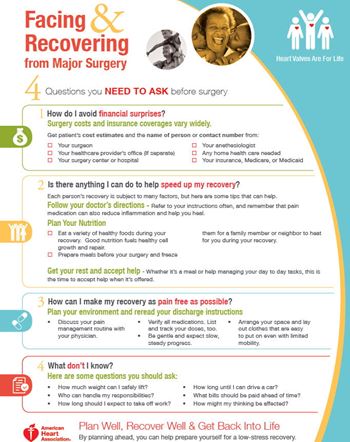
Print our pre-surgery checklist: Facing and Recovering from Major Surgery: English (PDF) | Spanish (PDF)


